
Experiential Curriculum: Why Learning by Doing Works

Parents today are looking for more than traditional instruction. They want learning that feels meaningful, practical, and connected to real life. An experiential curriculum meets this need by helping students gain knowledge through active participation, reflection, and hands-on projects. Instead of simply memorizing facts, children learn by exploring, testing ideas, and applying skills in authentic situations. As a result, students develop a deeper and more lasting understanding, stronger confidence, and long-term academic growth. When students are actively engaged in what they are learning, they are more likely to remain curious, develop critical thinking skills, and build the independence they need for future success. In leading private schools such as Pacific Academy Costa Mesa, experiential curriculum is not just a teaching method but a core part of how students learn every day.
1. What Is an Experiential Curriculum?
Students gain understanding through real experiences such as projects, experiments, collaborative tasks, and problem-solving activities. Instead of receiving information only through lectures or worksheets, students actively participate in the learning process.
This method is built on the idea that children learn best when they can connect academic concepts to real situations. Whether students are building a model, conducting a science experiment, writing and presenting a speech, or exploring cultural traditions through hands-on activities, they are learning in a way that feels purposeful.
A strong experiential curriculum is structured, guided, and intentional. It is not an unplanned activity. Teachers carefully design lessons so that experiences align with academic standards and learning goals. The hands-on work becomes the pathway through which students develop knowledge, skills, and confidence.

2. Why an Experiential Curriculum Is More Effective Than Passive Learning
Traditional learning often relies heavily on listening, note-taking, and memorization. While these skills have value, they do not always lead to long-term understanding. In contrast, through experiential learning, students actively engage with content and take ownership of their learning.
When children are actively involved, they tend to retain information longer. They are also more motivated because learning feels relevant. Students are not simply learning for a test. They are learning to solve a problem, complete a project, or achieve a real outcome.
Learning by doing also strengthens important life skills. Students practice communication, collaboration, time management, and creative thinking. These skills are difficult to teach through textbooks alone, but they naturally develop through experiential activities.
Over time, this approach builds a mindset where students feel more confident because they can clearly see what they have accomplished while exploring new challenges, making mistakes, and improving through effort.
3. Key Benefits of an Experiential Curriculum for Student Development
3.1. Stronger Critical Thinking Skills
One of the biggest strengths of an experiential curriculum is that it encourages students to think more deeply. Instead of focusing only on correct answers, students learn how to analyze information, ask questions, and evaluate solutions.
For example, in a science lesson, students may test different materials and observe results rather than simply reading about an experiment. In a history lesson, they may analyze primary sources or role-play real events to understand perspective and context better.
This type of learning helps children develop reasoning skills that go beyond the classroom.
3.2. Higher Student Engagement and Motivation
Engagement is essential for learning. Students who feel interested and involved are more likely to stay focused and participate. An experiential curriculum naturally motivates students because they see a purpose behind their work.
When students design, build, or create a presentation, they often feel proud of the result. This sense of achievement increases confidence and encourages them to keep improving.
Hands-on learning also benefits students with different learning styles. Some children learn best through movement, visuals, and active exploration. Experiential learning enables these students to succeed in ways that traditional instruction may not.
3.3. Improved Long-Term Memory and Retention
Research and classroom experience show that students remember information better when they apply it. In an experiential curriculum, students connect lessons to action. This creates stronger mental connections and improves recall.
For instance, students are more likely to remember math concepts when they use them in real-world problem solving, such as measuring materials for a project or analyzing data from an experiment. They are also more likely to remember vocabulary words when they use them in meaningful writing and speaking tasks.
The goal is not short-term memorization, but long-term understanding.
3.4. Confidence Through Real Achievement
Confidence grows when students experience progress. A well-designed experiential curriculum allows children to see the results of their learning.
Instead of receiving only grades or test scores, students can see what they have created, built, written, or presented. This makes learning feel more personal and rewarding.
Students also become more comfortable making mistakes. In project-based tasks, errors are part of the process. Children learn that mistakes are not failures, but opportunities to revise and improve. This mindset supports resilience, which is essential for both academic and personal growth.

4. How an Experiential Curriculum Works in Real Classrooms
4.1. Hands-On Science and STEM Exploration
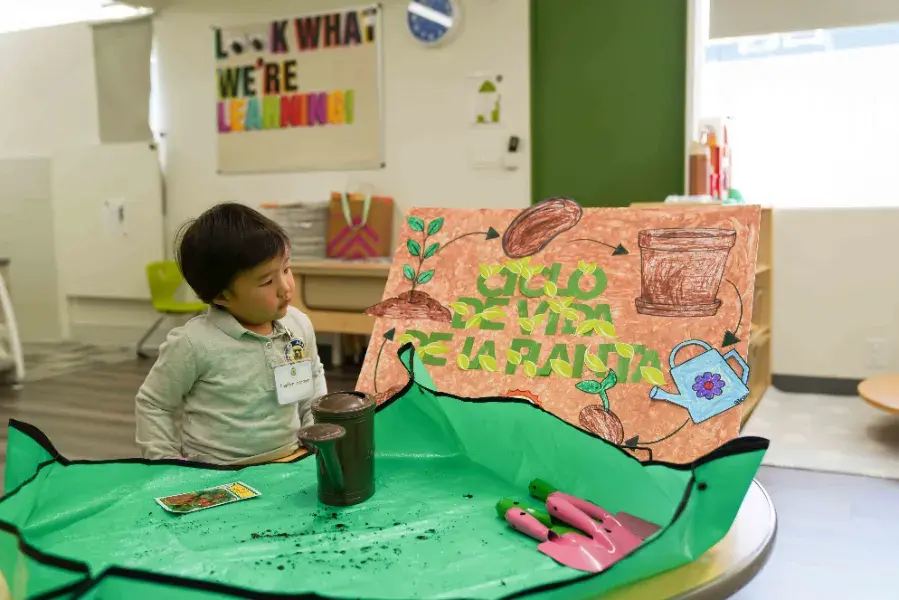
Science is one of the best subjects for experiential learning because it naturally involves investigation. In an experiential curriculum, students might grow plants to study ecosystems, build simple machines to understand physics, or test chemical reactions in a controlled environment.
Instead of reading about hypotheses, students practice forming hypotheses. Instead of memorizing scientific steps, they experience the process of experimentation.
STEM activities also encourage teamwork and creativity. Students often work together to design solutions, test ideas, and explain results. These experiences help students develop problem-solving skills that can support future academic success.
4.2. Project-Based Learning Across Subjects
A strong experiential curriculum often includes Project-Based Learning. Projects help students connect different academic areas and apply their skills in meaningful ways.
For example, students might write a storybook in English class, calculate budgets in math, research a cultural topic in social studies, and create an art display connected to their learning theme. This integrated approach helps students understand that subjects are connected, not isolated.
Projects also teach planning and organization. Students learn how to break down a goal into smaller steps and manage time effectively.
4.3. Real-World Writing and Communication
Writing gains significance when grounded in an authentic purpose. Within an experiential curriculum, students engage in tasks such as persuasive writing, newsletter creation, presentations, and debates.
This type of writing is not only about grammar and structure. It is about communication. Students learn how to express ideas clearly, adjust tone for different audiences, and present information confidently.
Public speaking and collaboration also become part of the learning process. Students practice listening, responding, and sharing ideas respectfully. These skills are valuable in both academic and real-life settings.
4.4. Cultural and Community Learning Experiences
Experiential learning can also involve cultural exploration and community-based activities. Students may learn about traditions, languages, and global perspectives through interactive lessons, presentations, and hands-on experiences.
For example, schools may organize cultural celebrations, community service projects, or student-led events that help children understand diversity and develop empathy.
This type of learning strengthens social awareness and encourages students to view themselves as part of a broader world.

At Pacific Academy Costa Mesa, the experiential curriculum is carefully structured to combine academic rigor with hands-on learning. Students regularly participate in project-based activities, STEM exploration, and real-world problem solving, allowing them to apply knowledge in meaningful ways while developing confidence and independence. What makes experiential learning effective is not just the activity itself, but how it is structured and guided. At Pacific Academy Costa Mesa, teachers design lessons that align hands-on experiences with academic standards, ensuring that students are not only engaged but also achieving measurable academic progress.
5. How an Experiential Curriculum Builds Social-Emotional Skills in Real Situations
Beyond academic outcomes, an experiential curriculum plays a critical role in shaping how students interact, reflect, and grow.
These real-world learning experiences help students develop essential social-emotional skills that support long-term success, both in the classroom and beyond.
5.1. Building Collaboration and Teamwork
A major advantage of an experiential curriculum is that students often work in teams. Group projects teach children how to share responsibilities, listen to others, and solve disagreements respectfully.
These teamwork experiences are essential, especially as students grow older and begin preparing for advanced academic environments. Collaboration is also a key skill in most future careers, making it an important part of long-term learning.
5.2. Developing Independence and Responsibility
Experiential learning encourages students to take ownership of their work. Instead of following instructions step by step, students are often asked to plan, create, and revise.
This builds independence. Students learn how to manage tasks, ask for help when needed, and stay accountable. Over time, this process strengthens self-discipline and confidence.
An experiential curriculum helps children move from passive learning to active responsibility, which supports academic success in later grades.
5.3. Encouraging Reflection and Growth Mindset
Reflection is an important part of experiential learning. Students are not only asked to complete a task but also to reflect on what they learned and how they can improve.
This reflection process supports a growth mindset. Students learn that improvement comes through practice and effort. Instead of fearing mistakes, they begin to see mistakes as part of learning.
This mindset can reduce academic anxiety and improve motivation, especially for students who feel pressure always to perform perfectly.
6. Why an Experiential Curriculum Supports Strong Academic Foundations?
Some parents may wonder if hands-on learning reduces academic rigor. In reality, a high-quality experiential curriculum can be highly structured and academically strong.
The key difference is that students do not learn concepts in isolation. They apply them. This strengthens foundational skills because children understand not only how something works, but also why it matters.
For example, students may learn math through problem-solving activities that require reasoning rather than repetition. They may learn grammar through real writing tasks rather than only worksheets. They may learn reading comprehension through discussion and analysis rather than simply answering multiple-choice questions.
When children truly understand concepts, they are more prepared for advanced coursework.
At Pacific Academy Costa Mesa, students benefit from a balance of academic structure and hands-on learning experiences. Programs that combine strong curriculum design with experiential education can help students build both knowledge and confidence over time. Families who want to see how experiential learning works in real classrooms are encouraged to visit Pacific Academy Costa Mesa, where this approach is consistently applied across subjects and grade levels.
7. Experiential Curriculum in Language and Multilingual Learning
7.1. Language Skills Improve Through Practice
Language learning becomes more effective when students use language in meaningful contexts. An experiential curriculum supports this by encouraging speaking, listening, and real communication rather than memorization alone.
In these environments, children engage in storytelling, role-playing, interactive discussions, and cultural projects that allow them to use vocabulary naturally. These experiences strengthen fluency and comprehension.

7.2. Cultural Understanding Becomes Part of Learning
Language is connected to culture. Experiential learning helps students understand cultural context through hands-on activities, celebrations, and interactive lessons.
This approach can support global awareness and respect for diversity. Students gain not only language skills, but also cultural confidence.
This is especially valuable in schools that emphasize multilingual development. For instance, Pacific Academy Costa Mesa offers Chinese Immersion and daily Spanish enrichment, which can support communication skills and cultural understanding through consistent practice.
8. How Parents Can Recognize a Strong Experiential Curriculum?
8.1. Look for Clear Learning Goals
A strong experiential curriculum is not a random activity. It should have clear learning objectives. Parents should ask how projects connect to academic standards and how teachers measure progress.
Well-designed experiential learning includes both creativity and structure. Students should know what they are working toward and why it matters. Clear learning goals ensure that experiential activities are not just engaging, but also academically meaningful and measurable.
8.2. Ask About Teacher Guidance and Support
Experiential learning works best when teachers actively guide students. Educators should provide clear instructions, support problem-solving, and help students reflect on their work.
It is important for parents to understand how teachers encourage independence while still providing the guidance students need to learn successfully. Younger students often need more guidance, while older students can handle more responsibility. A strong program adjusts expectations appropriately.
8.3. Evaluate Student Work and Classroom Culture
Parents can learn a lot by observing student work. Do students create meaningful projects? Are they writing thoughtfully? Are they engaged in discussions and presentations?
Classroom culture also matters. Experiential learning should feel organized, respectful, and focused. Students should have the freedom to explore ideas while still meeting clear academic expectations. Strong classroom culture ensures that hands-on learning remains purposeful, focused, and academically aligned.
8.4. Check for Long-Term Skill Development
A strong experiential curriculum should develop skills over time. Families should ask how the school builds critical thinking, writing, leadership, and collaboration from one grade to the next.
The goal is not just an engaging lesson today, but long-term readiness for future learning. This long-term progression is what transforms experiential learning into a foundation for future academic and personal success.
9. Experiential Curriculum vs. Traditional Learning: Finding the Right Balance
Experiential learning does not mean abandoning traditional methods. Many successful schools combine both approaches.
Students still need direct instruction, structured practice, and foundational academic skills. However, these skills become stronger when they are applied in practice.
A balanced experiential curriculum begins with direct instruction and extends into projects, experiments, discussion, and reflection. This approach reinforces academic mastery while fostering deeper, more meaningful understanding.
Families should look for a learning environment that values structure, engagement, and real-world relevance.
10. Conclusion: Why Experiential Curriculum Prepares Students for Real Success
An experiential curriculum helps students move beyond memorization and into meaningful learning. Through hands-on projects, real-world problem-solving, collaboration, and reflection, children develop a deeper understanding, stronger confidence, and essential life skills. This approach supports both academic growth and personal development, making it a powerful model for long-term success. Families who want to learn more about experiential education may consider visiting Pacific Academy Costa Mesa for a campus tour or attending an open house. For more information, contact the school at Phone: 833-796-5688, Email: CostaMesa@PacificAcademy.org, or visit 2987 Mesa Verde Dr E, Costa Mesa, CA 92626.


Comments